
Drought Severity Increasing Across Watershed – Lake of the Woods Outflow Decrease on August 21
Since mid-May, drought conditions have steadily spread and increased in severity across the watershed. in response, the LWCB has directed gradual reductions in Lake of the Woods outflow over the summer. A further reduction is scheduled for Friday, August 21.
Drought Conditions
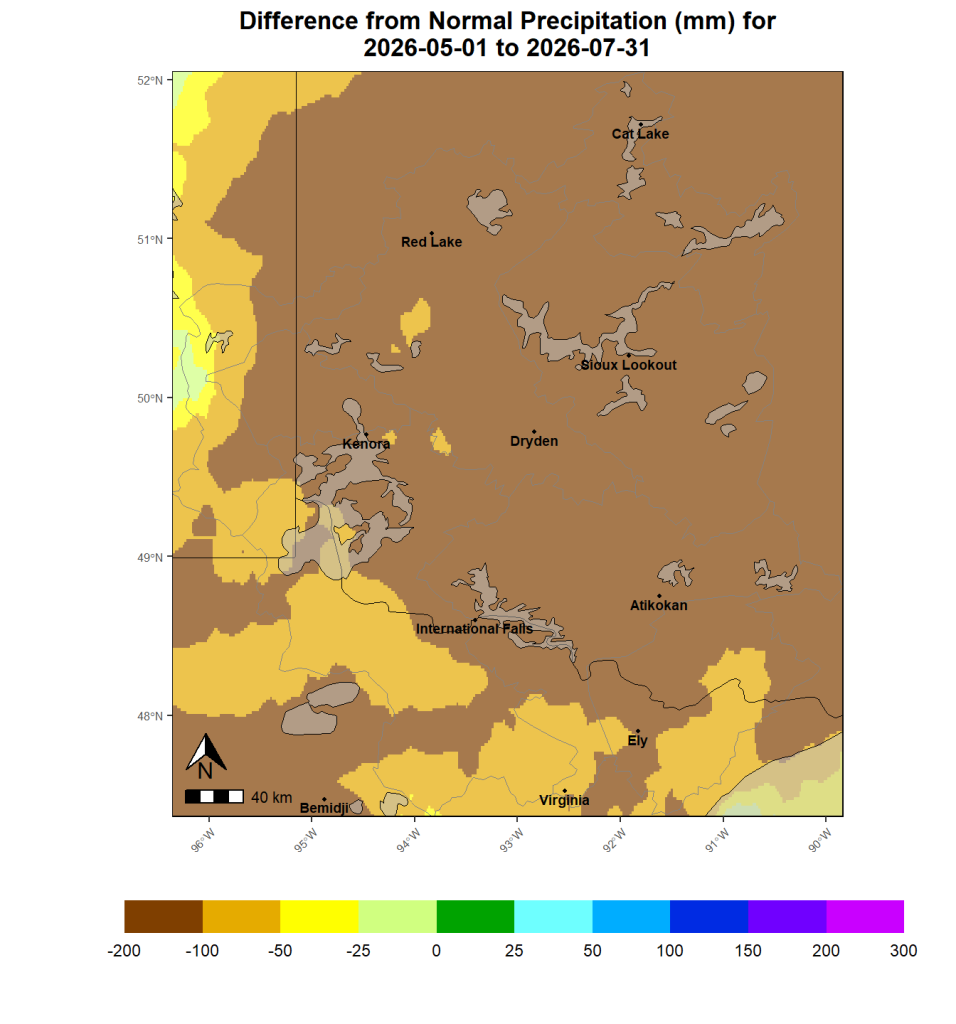
Total precipitation in May through July was well below normal across the region:
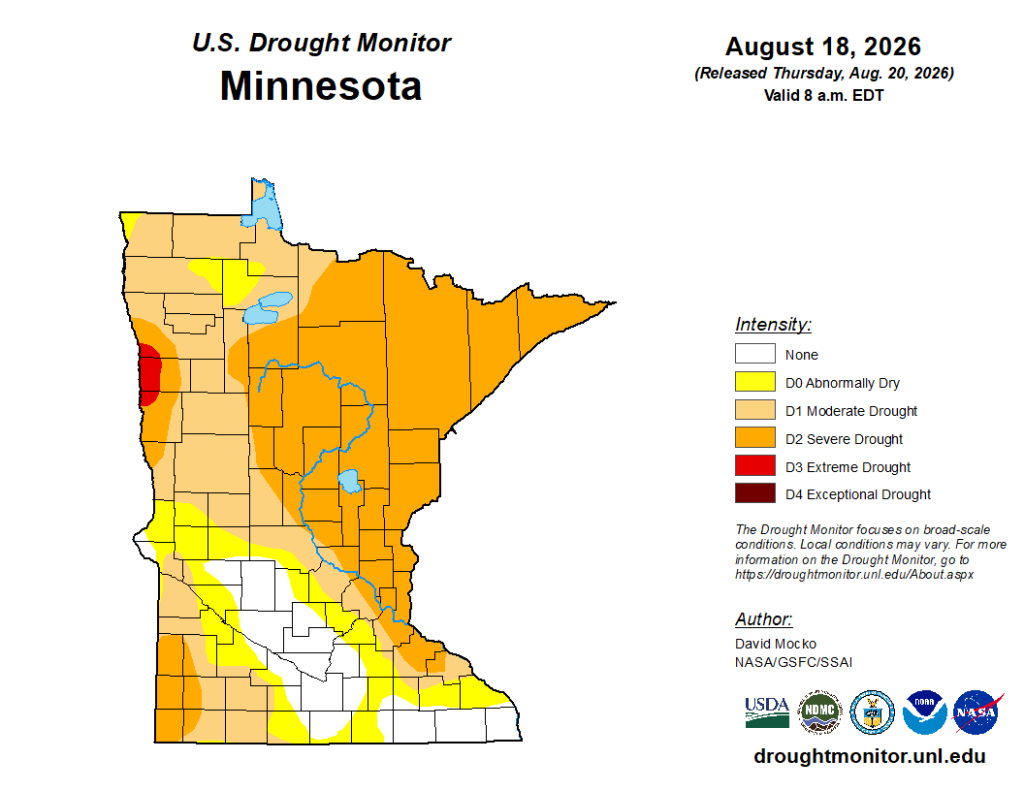
The August 18 Minnesota drought map from the United States Drought Monitor shows the entire Lake of the Woods watershed in Minnesota as being in either moderate drought (Lake of the Woods and lower Rainy River) or severe drought (Rainy Lake and upstream areas).
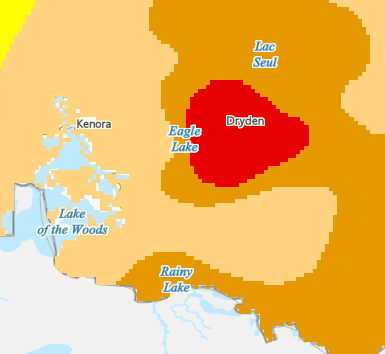
The most recent Canada Drought Monitor Map is from July 31 and shows the drought conditions extend across the Canadian portion of the Lake of the Woods watershed. The English River watershed is also in drought, with the central region showing a pocket of Extreme Drought developing.
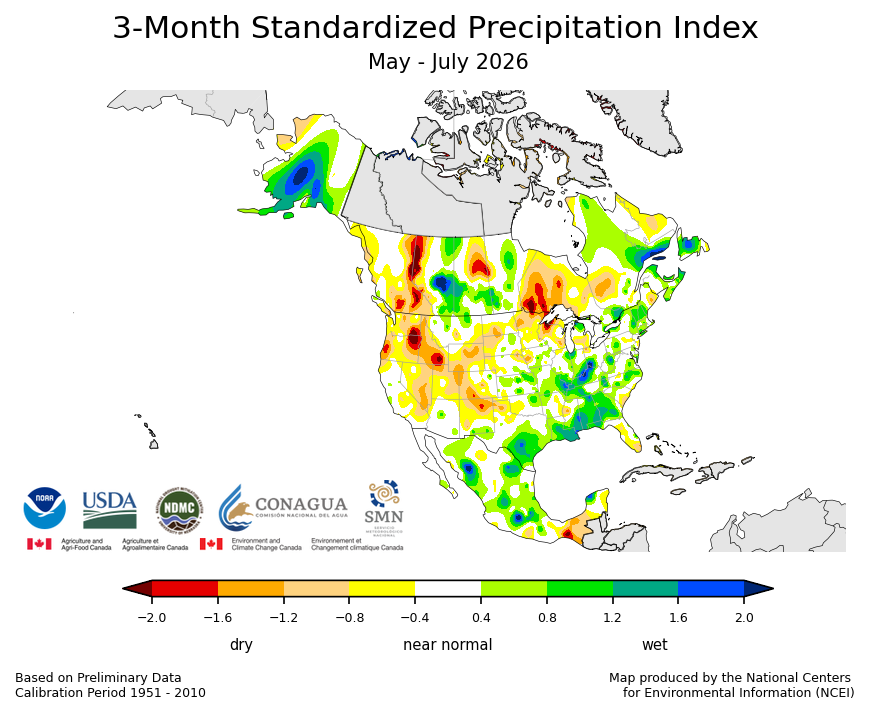
Another visualization of the change in conditions since early May is the Standardized Precipitation Index, produced by the North American Drought Monitor. Values below zero are related to drought conditions. All of the watershed is below zero with much of the watershed near negative 2, well below normal for this period, and one of the driest parts of North America compared to normal over this 3-month period.
Water Supply to Lake of the Woods
As a result of this worsening drought, flow in all tributaries in the Lake of the Woods watershed are below the 10th percentile (1-in-10 year low) for this time of year. Rainy Lake outflow, which is normally the largest source of water for Lake of the Woods, has been at the minimum allowed by the International Joint Commission since late June.
In August, daily inflow values to Lake of the Woods have been well below normal, with many daily values below zero. Negative inflow in late summer occurs under dry conditions due to evaporation from the lake. Under negative inflow conditions, the lake level would decline even with no outflow through the dams into the Winnipeg River. Current inflow is less than 5th percentile for late August, below a 1-in-20 year low.
Lake of the Woods Regulation Strategy for Low Inflow
The LWCB’s summer Regulation Strategy, adopted at Regulation Meeting in Kenora in June, lays out how the LWCB aims to balance conditions under low inflow conditions. The Secretariat has been implementing this strategy, making gradual cuts to outflow as the lake level has declined to balance the lake and river levels. The strategy includes lowering outflow to as low as 150 m³/s to prevent the lake from falling below 322.70 m (1058.73) through the end of September. The current level of Lake of the Woods is 322.75 m (1058.9 ft) and the rate of decline has been 3-4 cm (1-1.5 in) per week.
Lake of the Woods Outflow Reduction August 21 to 150 m³/s
Lake of the Woods authorized outflow will be reduced to from 200 to 150 m³/s on Friday, August 21 in line with the strategy. The level of the Winnipeg River below Norman Dam is expected to decline by about 7 cm (~ 3 in) as a result of this flow change, with smaller effects downstream. The river level at Minaki will not be affected by this flow change.
This flow reduction will slow but not stop the declining lake level. Substantial rainfall around Lake of the Woods and in the headwaters are needed to improve drought conditions, raise tributary flows, and provide sufficient inflow to Lake of the Woods to allow the lake level to rise again.
No Changes to Lac Seul Outflow
Despite drought conditions in the English River watershed, inflow to Lac Seul is at the lower end of the normal range for late August. This is due in large part to flows out of Lake St. Joseph into Lac Seul via the Root River Diversion.
The current level of Lac Seul is 356.31 m (1169.0 ft), a 30th percentile level for this time of year. The average lake level rose by 1.5 cm (~ 0.5 in) over the last week and is expected to change little over the next week. Lac Seul authorized outflow is 150 m³/s with no changes scheduled.

